

What is Play Therapy?
Play therapy is a form of psychotherapy designed specifically for children, using play as their natural language to express thoughts, feelings, and experiences that may be difficult to put into words. Unlike adults, children often communicate through action rather than speech and play provides a safe, structured, and creative way for them to explore their inner world.
In play therapy, the child is at the centre of the process. The therapist follows a child-led approach, observing and responding to the child’s choices, pace and emotional needs. This approach allows children to express themselves freely, make sense of their experiences, and gain a sense of control and mastery over challenges in their lives.
Therapeutic play can take many forms, including:
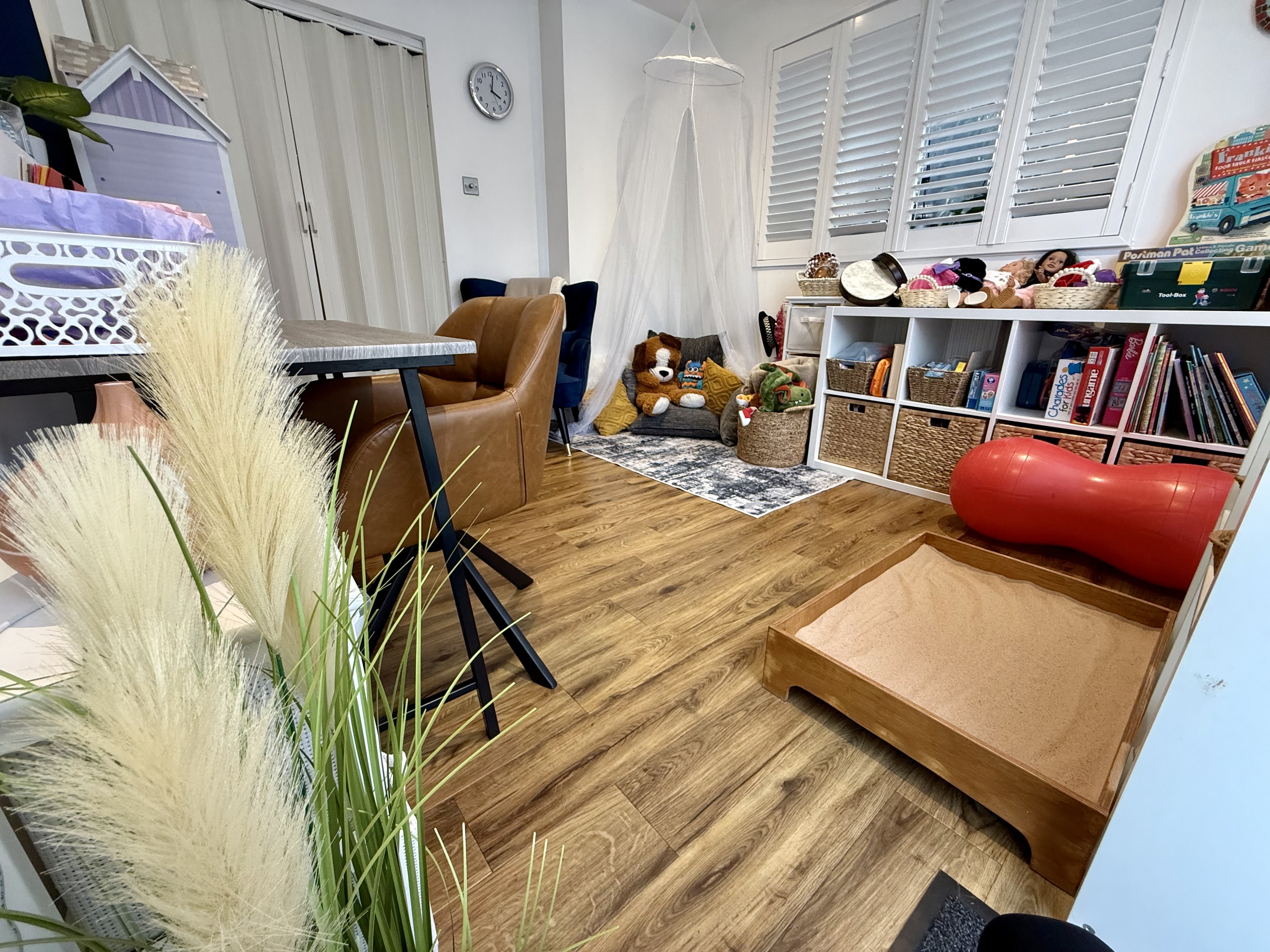
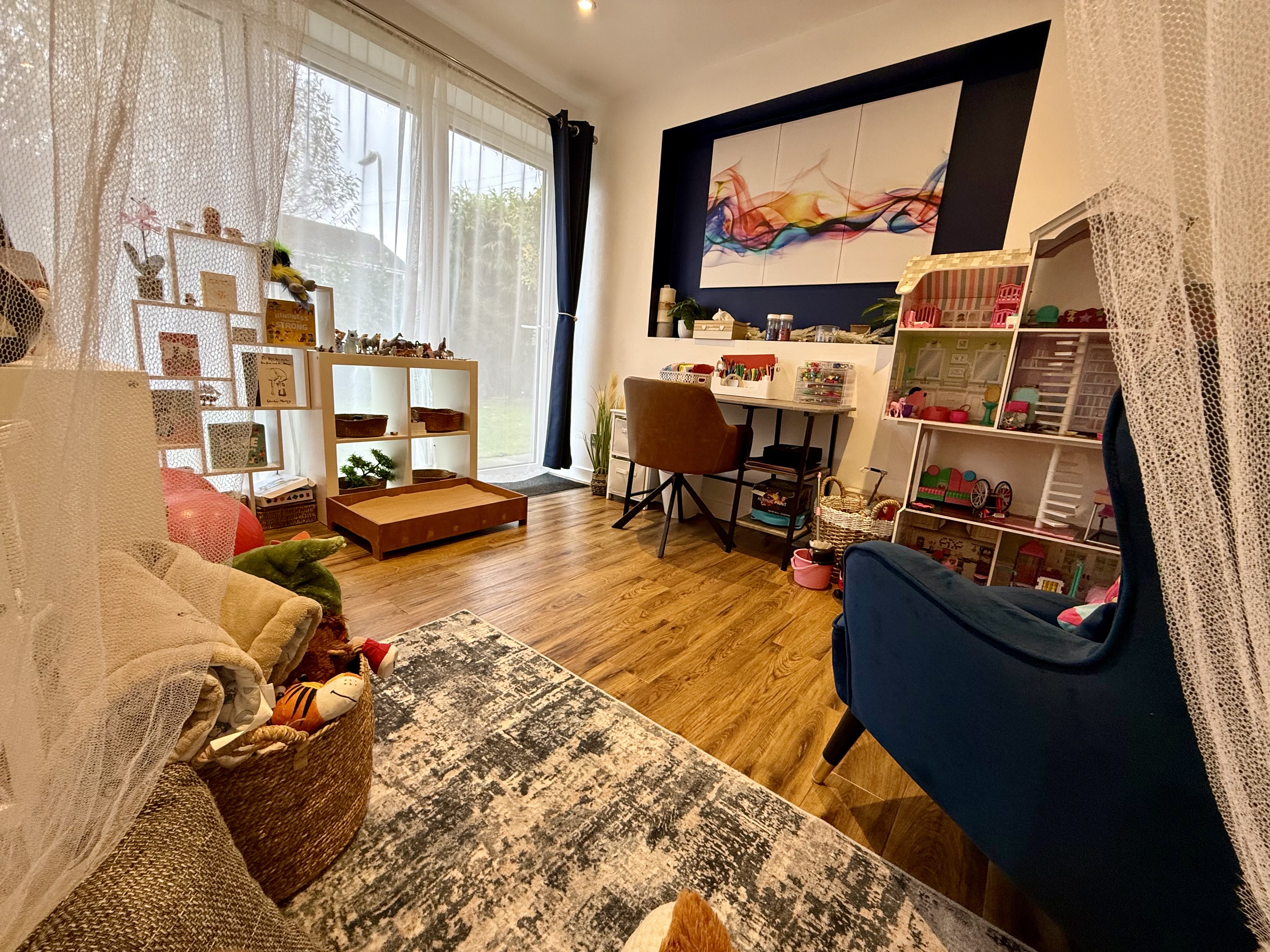
- Role-play, puppets and imaginative play to explore emotions and relationships
- Art, drawing or creative storytelling to communicate experiences and feelings
- Sand tray work to symbolically represent thoughts, emotions and experiences
Play therapy can be non-directive, where the child leads entirely and the therapist reflects and supports or directive, where the therapist gently guides the play to address specific challenges or develop coping strategies. Most effective approaches integrate both methods, along with principles from psychodynamic, trauma-informed, child-centred, attachment-based and child development frameworks.
Through this process, children learn to:
- Understand and express their emotions in a healthy way
- Develop coping strategies for stress, anxiety or behavioural difficulties
- Build self-esteem, confidence and a sense of agency
- Improve social and relational skills
Process trauma, loss or other challenging life experiences Play therapy is suitable for children aged 4–13 and can support a wide range of challenges, including anxiety, depression, behavioural difficulties, social or school challenges, trauma, attachment difficulties, neurodiverse needs (such as ADHD or ASD) and more.
Ultimately, play therapy provides a safe, nurturing, and non-judgmental space where children feel seen, heard, and valued. It is a gentle yet powerful way for children to process experiences, strengthen their resilience, and develop the skills and emotional resources to thrive — all through the natural, healing language of play.
How Play Therapy Helps Children?
Play therapy provides children with a safe, non-judgmental space to express thoughts and feelings they may not be able to put into words. Through play — their natural language — children can explore emotions, work through challenges, and make sense of experiences in a way that feels comfortable and empowering.
It helps children process difficult feelings, build resilience, develop social and emotional skills and strengthen self-confidence. By following the child’s lead, play therapy supports them to discover solutions, express themselves freely and reconnect with a sense of safety and control in their world.
Over time, children often gain a stronger understanding of their emotions, healthier ways to cope with stress, and an increased sense of self-worth — all while feeling seen, heard, and genuinely supported.
About
Is Play Therapy Right for your Child?
Play therapy is suitable for children aged 4 to 13 who may be experiencing a wide range of emotional, social, or behavioural challenges. It is designed to support children who are struggling to express themselves verbally, helping them find healthy ways to communicate and process their feelings.
Children who may benefit from play therapy include those experiencing:
- Anxiety, low mood or depression
- Trauma or difficult life events, including abuse, neglect, loss or family changes
- Behavioural challenges at home or school
- Difficult transitions, such as moving home, changing schools or family separation
- Neurodiverse needs, including Autism Spectrum Disorder (ASD), ADHD or other developmental differences
- Attachment difficulties, struggles with self-esteem or challenges in forming trusting relationships
- Social difficulties, including making friends or managing peer interactions
This list is not exhaustive — play therapy can support children facing a wide variety of emotional, behavioural, or developmental challenges.
Play therapy is for any child who needs support in understanding themselves, processing their experiences, and feeling truly seen, heard, and valued.

 Healwave Play Therapy